
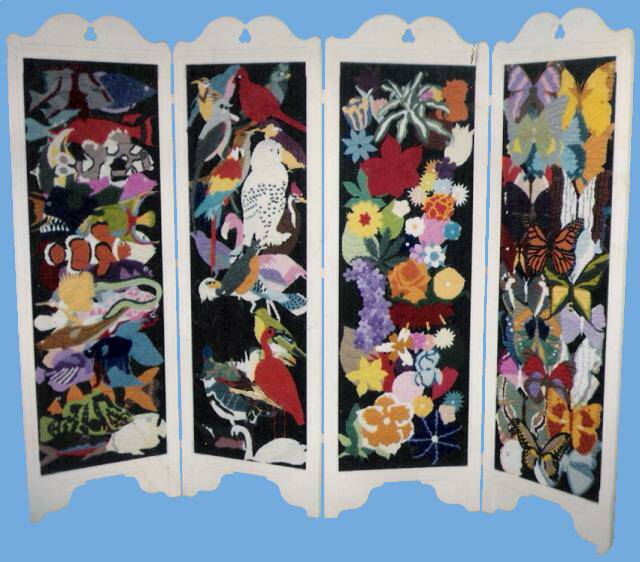
DIAGONAL CROSS STITCH
The Diagonal Cross Stitch should not be confused with the diagonal method of working the regular
cross stitch. The diagonal cross stitch is a stitch all on its own. This stitch is created by combining the half cross stitch and the upright cross stitch, resulting in an interesting textured look. It covers both sides of the canvas, making it a extremely durable stitch. This stitch may be resized to accommodate the piece on which you are working, but should always be worked from bottom to top. Four diagrams have been used to demonstrate this stitch.
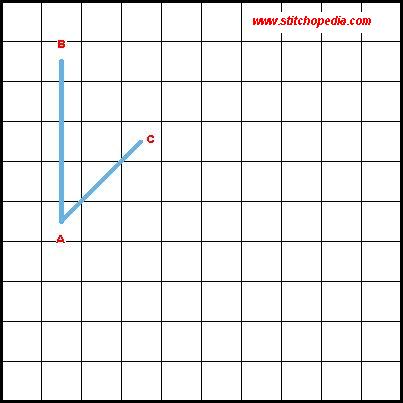

Diagonal Cross Stitch (Diagram 1):
Bring the needle up at A, move up over four canvas threads, bring the needle down at B. Bring the needle up at A (again), move up and to the right over two canvas intersections, bring the needle down at C. Now, continue on to Diagram 2...
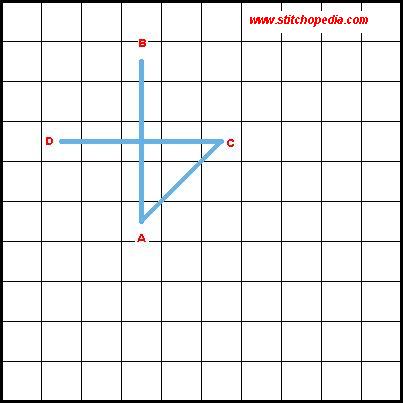
Diagonal Cross Stitch (Diagram 2):
Beginning where we left off at C, bring the needle up at D, move to the right over four canvas threads, bring the needle down at C. Although it does not yet look finished, this completes the first diagonal cross stitch. As additional stitches are added, you will see how each addition adds to the finished look. Now, continue on to Diagram 3...
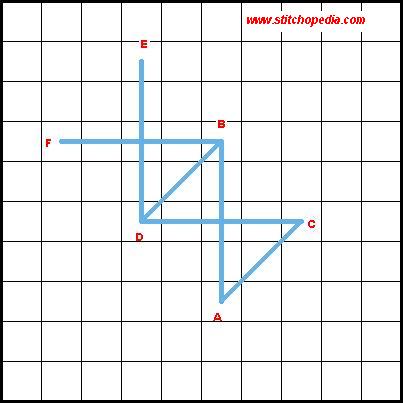
Diagonal Cross Stitch (Diagram 3):
Beginning where we left off at C, bring the needle up at D, move up over four canvas threads, bring the needle down at E. Bring the needle up at D (yes, again), move up and to the right over two canvas intersections, bring the needle down at B. Bring the needle up at F, move to the right over four canvas threads, bring the needle down at B. This completes the second diagonal cross stitch. Now, continue on to Diagram 4...
Diagonal Cross Stitch (Diagram 4):
As you can see from this diagram, each diagonal cross stitch completes the previous diagonal cross stitch. You will need to add additional stitches (half-cross or upright cross) to complete any unfinished areas when you are done.
 | ||||||
Stitch-opedia
An encyclopedia of needlepoint Stitches...

Copyright 2006...Stitchopedia...All Rights Reserved
*Stitch Index*
Select the first letter of the stitch you are looking for...
*Stitch Index*
Select the first letter of the stitch you are looking for...
| ||||||
